Christmas Gift Guide: Handmade Opal Jewellery for Every Budget
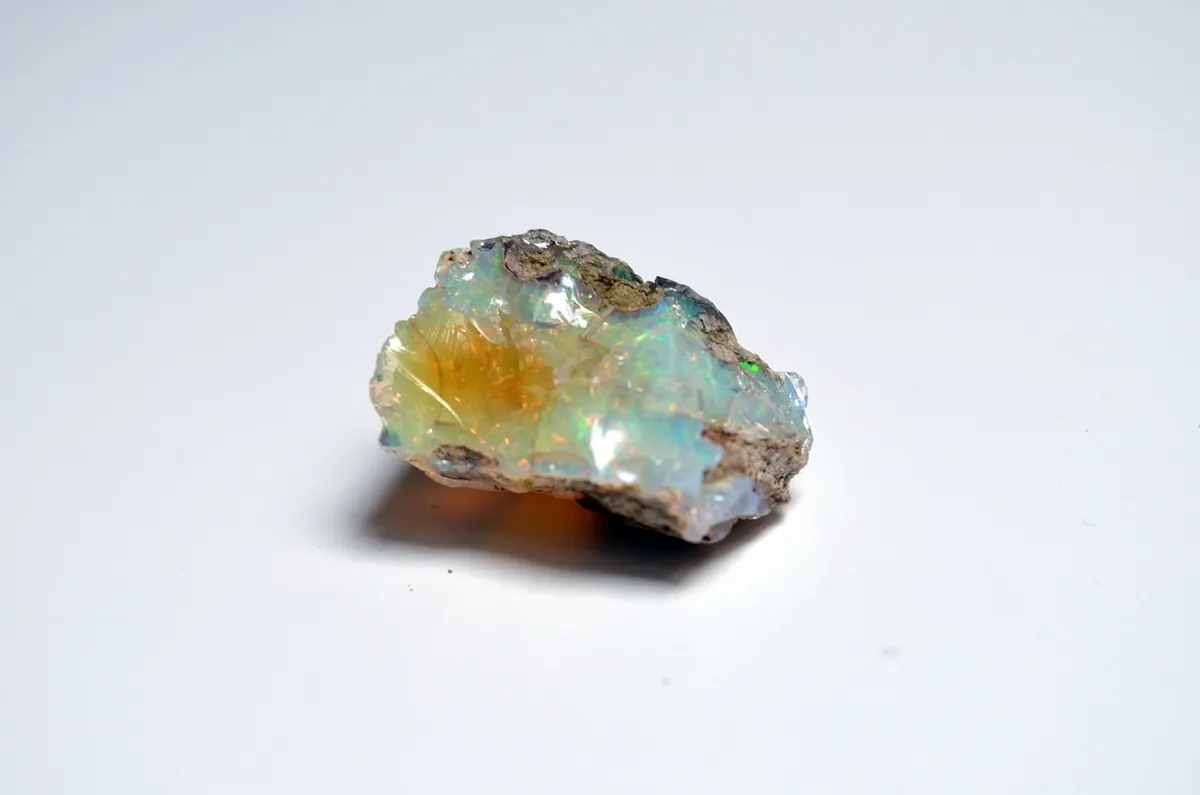
Opal is the stone that makes people look twice. A good one shifts from green to pink to orange as it moves, and because no two stones are alike, a wire-wrapped piece never feels like something picked off a shelf. That is a useful quality in a Christmas gift — it says the thing was chosen, not just bought. What follows is a walk through three price bands — what your money buys at each, who each suits, and how to present a handmade piece so it lands properly on the morning.
What you are paying for
Every handmade opal piece is two purchases in one: the stone and the hours. The stone sets the floor on price, the wirework sets the ceiling, and knowing which is which stops you overspending on the wrong half. A £250 pendant with a mediocre stone and a heavy setting is a worse gift than a £90 pendant with a small, sharp, flashing stone and a clean wrap around it.
On the stone side, three words matter. Solid opal is natural material, cut and polished in one piece; it is the most durable and the most valuable. A doublet is a thin slice of opal glued to a dark backing. A triplet adds a clear quartz or glass cap on top. Both are honest, affordable ways to wear opal, and both need gentler handling — never soak them, and never leave them in an ultrasonic cleaner.
On the wire side, copper and brass cost least and age to a warm patina. Sterling silver sits in the middle and suits almost everything. Gold-filled wire carries a bonded layer of real gold over a brass core and wears far better than plating, which is why it costs more — plating rubs through at the high points within a year on a piece worn daily. Labour is the third factor: a simple cage might take an hour, while a woven setting with a hand-formed bail can take an afternoon.
One more term is worth knowing before you shop: brightness. Australian sellers usually grade it from 1 (dull) to 5 (brilliant), and it describes how far the colour carries, not how pretty the stone is. A bright 3 set against a deep black background will out-flash a pale 5 from across a room.
Under about £40 — small, bright, genuinely wearable
At this end you are buying a maker's eye rather than rarity, and that is fine. Expect small Ethiopian opal cabochons, lab-created opal, and copper or brass wire. Because the stones are small, look for designs where the opal sits high and open rather than buried behind loops of wire. A 6mm stone behind a heavy weave will read like a grey pebble from two steps away, however good the stone underneath.
Best buys at this level: a single-stone pendant on a waxed cotton cord, a pair of small drop earrings, or a charm for a chain the recipient already owns. If the person has sensitive ears, ask for niobium, titanium or sterling silver findings rather than unmarked hooks — the wire is the cheap part of a cheap earring, and it is the part that touches skin.
Two practical notes. Ethiopian opal is hydrophane, meaning it absorbs water and can go temporarily cloudy after a shower or a swim; it dries clear again, but it is not the stone to wear in the sea. And for anyone who will wear it daily, a triplet behind a protective cap survives more knocks than a thin solid slice — a real advantage on a bracelet or a ring.
Roughly £60 to £180 — the sweet spot
This is where solid Australian opal starts to appear: white opal from Coober Pedy, boulder opal from Queensland with its ironstone backing, and the occasional smaller piece from Lightning Ridge. You will also see sterling silver and gold-filled wire, and more involved settings.
Pendants and necklaces
A wire-wrapped pendant is the safest gift in this range. Choose a stone at least 10mm across so the colour reads from a distance, and check the chain length: 40cm sits at the collarbone, 45cm is the most common, 50cm and above works over a jumper. Boulder opal suits people who dress in denim and wool; bright white opal in a fine silver wrap suits finer fabrics. If you are unsure, a boulder opal on a 45cm silver chain is the closest thing to a universal answer.
Earrings and rings
Matched pairs cost more than a single stone, because a maker may sort through a parcel to find two that flash the same way. That labour is worth paying for — mismatched earrings look like a mistake, not a design choice. Wire-wrapped rings are usually made to a measurement, so borrow a ring that fits and measure its inner diameter, or ask the maker for their sizing method. Adjustable shanks are comfortable, but the wire fatigues if it is bent open and closed every day.
£200 and above — a piece that lasts a generation
Here you are paying mainly for the stone: black opal, larger boulder opal, or a solid white opal with a rare pattern and strong brightness. The wire is likely to be gold-filled or solid gold, and the setting hand-woven rather than caged.
Ask for details in writing before you buy: origin, whether the stone is solid, its weight in carats, and a photograph or short video taken in daylight rather than under a shop lamp. If you are commissioning, expect to wait — a bespoke wrap of a stone the recipient already owns is one of the most thoughtful gifts in this bracket, because the cost goes into the work rather than a stone they did not choose. A grandmother's loose opal reset into a new pendant, or a stone picked up on a first trip together, will beat anything off a shelf.
Matching the piece to the person
A few pairings that tend to work:
- The daily silver wearer: a low-profile boulder opal pendant on a 45cm sterling chain. Nothing to catch on a scarf.
- The earring person: small solid opal drops in gold-filled wire, light enough to forget about by lunchtime.
- The one who never takes jewellery off: a triplet or a capped solid stone in a plain wrap, on a chain with a soldered, not glued, clasp.
- The person with a full jewellery box: a charm or a single striking ring rather than another necklace. Add to what they have.
- The one who says they don't wear jewellery: a small opal on a waxed cord they can tuck under a shirt. No decision required in the morning.
Buying handmade at a distance
Most handmade opal is bought online, so learn to read a listing the way a maker reads a stone. Look for daylight photographs, ideally two or three from different angles, and treat a single image shot on black velvet under warm light with suspicion. Ask for the stone's dimensions in millimetres rather than descriptions like "large". A good seller will happily send a short video tilting the piece.
Check the wire gauge if it is listed. Very fine wire looks delicate in a photo and bends in the first week; heavier gauges hold a shape for years. If you are buying in the last fortnight before Christmas, ask directly about dispatch dates rather than trusting a generic shipping note. And if a price seems impossibly low for a solid Australian stone, it is almost certainly a doublet, a triplet or synthetic — which is fine, as long as you know which you are buying.
Care, and what to say when you hand it over
Opal is softer than most gemstones and dislikes two things: sudden temperature change and household chemicals. A few habits keep a piece looking new:
- Put it on last and take it off first — after perfume, hairspray and lotion have dried.
- Store it in a soft pouch rather than loose in a box with harder stones.
- Clean with lukewarm water and a soft cloth. Skip the ultrasonic, the steam cleaner and the jewellery dip.
- Check the wire once a year. A single loose loop is a two-minute repair now and a lost stone later.
- Never soak a doublet or triplet, and keep Ethiopian opal out of the shower.
When you give it, pass that on in a sentence or two. It takes ten seconds, and it is the difference between a piece that gets worn for a decade and one that spends the winter in a drawer.
Presenting it on Christmas morning
A handmade piece deserves better than being buried under three other parcels. Wrap it in tissue inside a small box, and if the maker sent a card with the stone's origin, keep it — that scrap of paper is what turns a pendant into a story. If you commissioned a wrap of a stone that already belonged to the recipient, a short written note explaining where the opal came from will likely be remembered longer than the jewellery itself.
Good opal does not need explaining. It only needs to be handed over in daylight.
So let them open it near a window. The whole point of the gift is that it changes as it moves, and that is something a room lit by fairy lights will never quite show.
Photo: Varga / Pixabay