

Wire Gauge and Temper: Choosing the Right Wire for Gemstone Jewellery
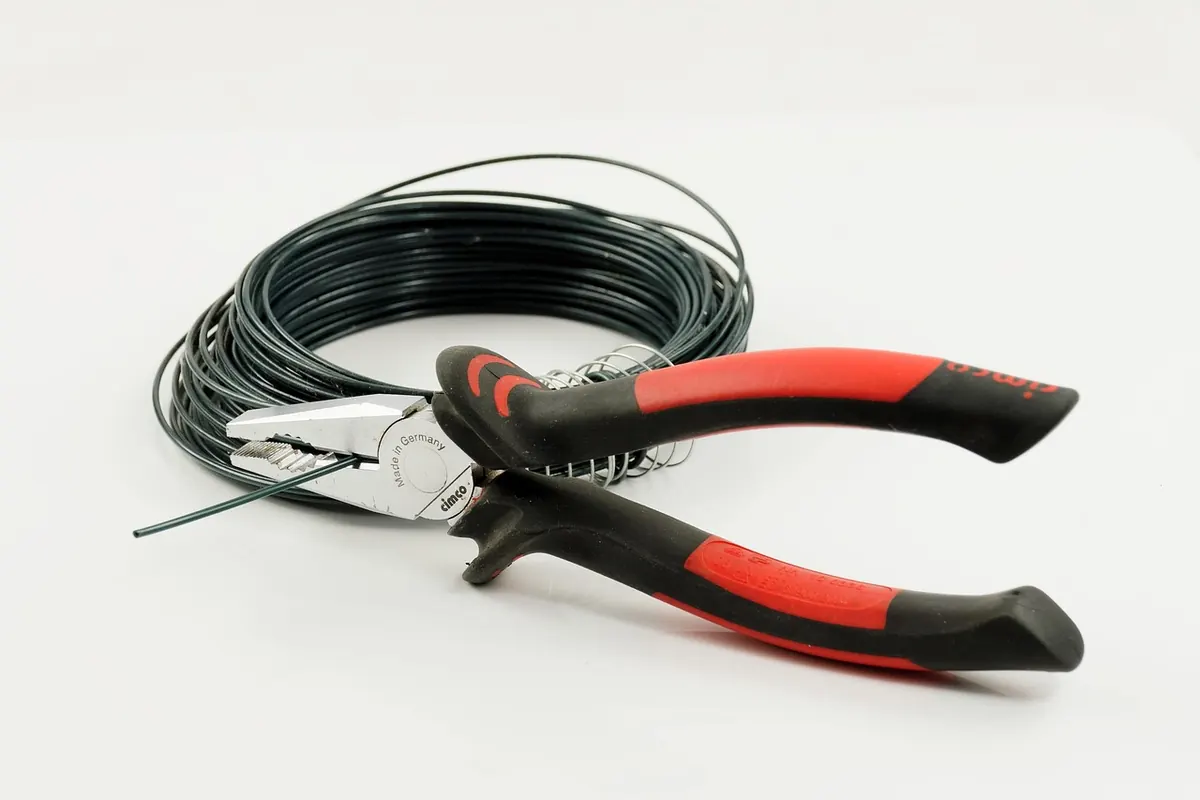
Ask ten wire jewellers which gauge they reach for first and you will get ten answers, but they are all describing the same handful of trade-offs. Wire is not simply a length of metal you bend around a stone. Its diameter decides whether the setting holds. Its hardness decides whether you can bend it at all. Get both right and a wrapped pendant comes together in an evening; get one wrong and you will fight the wire, kink it, and quietly blame the stone.
Here is how gauge and temper behave on the bench, and how to choose them with a particular gemstone in front of you.
Gauge: the backwards number that decides everything
Gauge measures diameter, and it runs against intuition: the higher the number, the thinner the wire. A 26-gauge wire is roughly half the diameter of a 20-gauge one, but it is far less than half as strong. Strength follows cross-sectional area, so a small drop in diameter costs a great deal of holding power. A setting that feels solid in 20 gauge can sag the moment you substitute 26.
There is a second complication. Two systems are still in circulation — American Wire Gauge (AWG) and Standard Wire Gauge (SWG) — and 20 gauge in one is not the same diameter as 20 gauge in the other. The workaround is simple: buy from suppliers who print the millimetre measurement beside the gauge number, then think in millimetres and treat the number as a nickname.
Common diameters and what they suit
- 2.0 mm (around 12 gauge): heavy cuffs and chunky bangles.
- 1.6 mm (14 gauge): bangle cores, wide ring shanks, sturdy freeform frames.
- 1.3 mm (16 gauge): pendant frames, ear wires, the backbone of caged settings.
- 1.0 mm (18 gauge): medium frames, clasps, jump rings, prong-style mounts.
- 0.8 mm (20 gauge): the workhorse for binding and wrapping.
- 0.6 mm (22 gauge): neat coil wraps, small beads, detailed weaving.
- 0.5 mm (24 gauge) and finer: delicate finishing coils and bead weaving.
Treat that table as a starting point rather than a rule book. If your supplier lists a diameter that falls between two rows, trust the millimetres.
Temper: how hard the metal already is
Temper describes how much the wire was worked before it reached you. The names refer to the metal's condition, not its quality.
Dead soft
Dead soft bends under almost no pressure and stays where you put it, which makes it the natural choice for wrapping, coiling and any shape with tight curves. It also dents, stretches and work-hardens as you handle it, so the more you adjust a section, the stiffer and more brittle it becomes. It will not hold a spring shape on its own.
Half hard
Half hard has been drawn or rolled further and has a gentle spring. It holds a shape under light load while still responding to smooth pliers. Reach for it when the wire has a job to do: ear wires, clasps, jump rings that must stay closed, pin stems and frames that need to keep their line. It still work-hardens, but you begin further along the curve.
Full hard
Full hard is springy and unforgiving, used where the wire needs memory — some ear wires, memory wire, anything that must resist being pulled open. Bend it sharply and it may crack, and a kink is almost impossible to remove. Most hand-wrapping projects use very little of it.
Four questions before you cut a length
- What is the stone's weight? A large cabochon or a heavy faceted stone wants a frame of 18 gauge or thicker, with at least two binding points.
- Will the wire pass through the drill hole? Measure the hole rather than guessing. If the wire must pass through twice, you need a hole roughly two and a half times the wire diameter or more.
- Is the wire structural or decorative? Structure wants 16–20 gauge; decoration and coils can drop to 22–26 gauge.
- How much will you manipulate it? Lots of small adjustments mean starting softer, not harder.
The stone gets a vote too
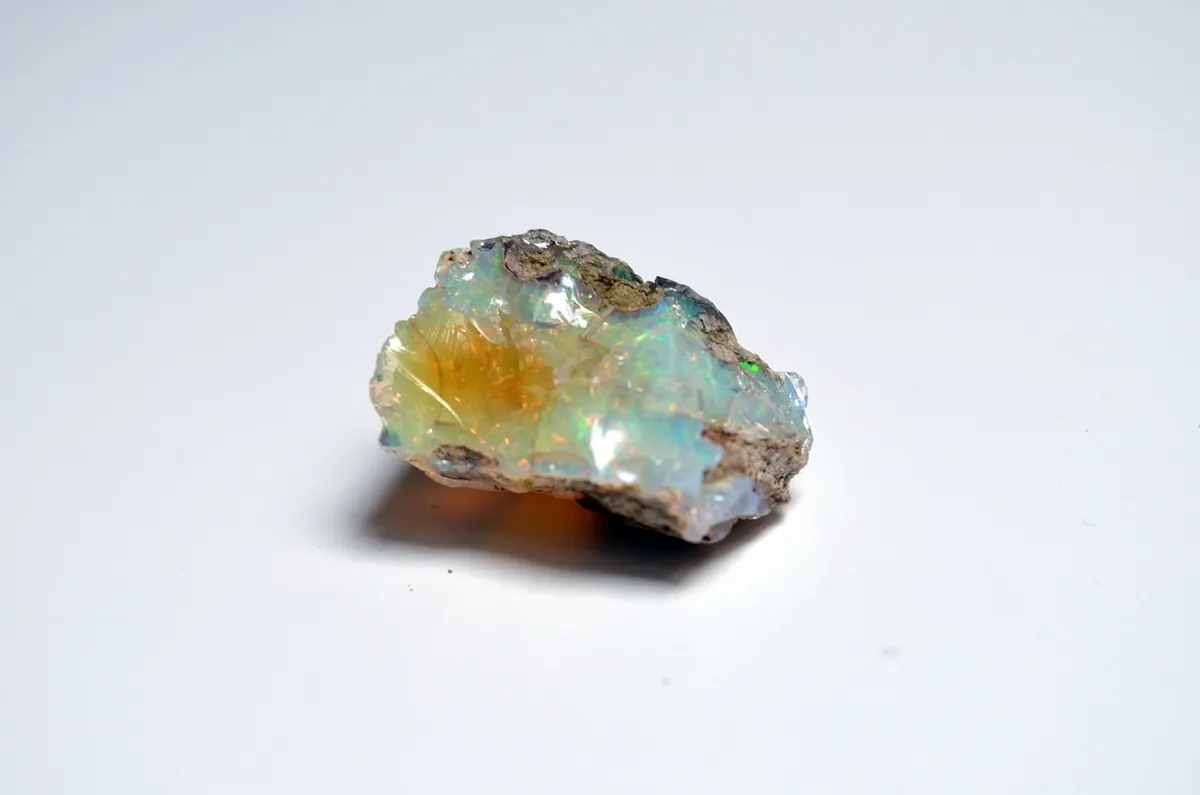
Gemstones are not passive. Raw quartz points, chips and faceted briolettes with crisp edges can wear through fine wire over months of movement; the coarser the stone, the thicker the wire should be. Smooth, well-polished beads are kinder and can take a 24-gauge or 26-gauge coil without complaint.
Weight matters just as much as edges. A dense stone such as garnet or hematite pulls harder on a wrapping than a piece of the same size in a lighter material, so allow an extra binding pass or a thicker spine. If the finished piece has to survive daily wear, build it as though someone will tug on it — because someone will.
Metal changes the rules
Two wires of the same diameter in different metals behave nothing alike. Sterling silver in dead soft is a pleasure to wrap and work-hardens quickly; in half hard it is springier and better suited to findings. Fine silver is softer and more forgiving but bends out of shape more readily.
Gold-filled wire usually arrives half hard, wears well and keeps its colour. It can be tricky to anneal, because overheating disturbs the bonded gold layer, so design pieces that do not need heat. Copper is inexpensive and excellent for practice, but it stiffens fast and develops a patina. Brass feels noticeably tougher than copper at the same gauge. Coated craft wires are fine for experimenting, though the colour layer can crack where it is bent repeatedly.
If someone reacts to a base metal, that is a question for a doctor or dermatologist rather than a wire supplier.
When a piece fails, it is usually the wire that was too thin — not the design that was too ambitious.